
BUILDINGS AND STRUCTURES
OF STEEL



 Main page
Roof trusses

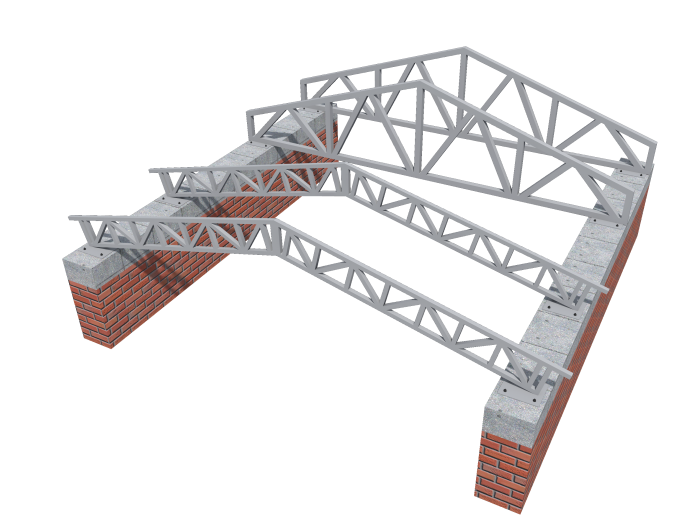
A roof truss is a load-bearing structure intended for the construction of a roof.
A roof truss is a metal frame. The design of trusses comes in different shapes and sizes: trapezoid, triangle, rectangle. The choice of the type and kind of trusses depends on the configuration of the building where the installation will be carried out.
Readycon Engineering company manufactures and sells roof trusses. The company’s specialists develop and implement roof trusses for various buildings under construction. It is possible to perform truss structures according to individual parameters. The accompanying documentation for the truss allows for precise installation.
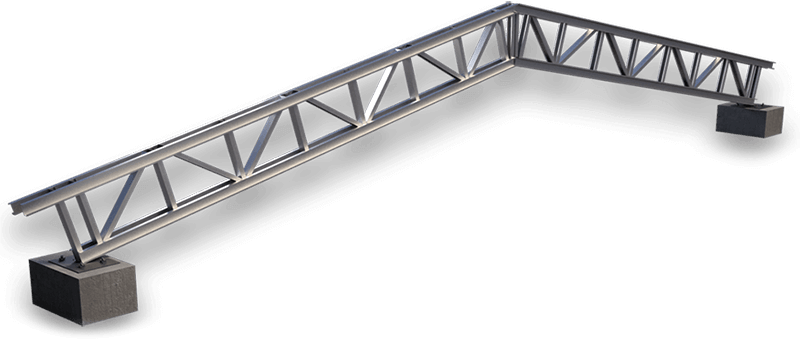
ADVANTAGES OF LGSF TRUSSES:
- Strength and reliability of structures (design load is 200 kg/m2);
- Galvanized coating (service life is over 50 years);
- Easy installation (bolted connection without painting structures);
- Lightweight structures (possibility of installation without the use of lifting equipment);
- Design documentation (attached to each delivery);
- Optimal price.
FEATURES OF ROOF TRUSSES
Trusses are used in construction having proven themselves when covering medium and large spans. Durable truss structures are mounted during the construction of hangars, warehouses, industrial buildings, offices, houses, and other structures.
When trusses are installed on a building, a solid and reliable foundation is needed – columns or the armoured belt of the building.
A high-quality truss guarantees strength and reliability of the building during operation.
The Readycon Engineering company uses trusses of two types: made of LGSF profiles and hot-rolled metal.
Trusses made of LGSF profiles have excellent consumer characteristics and wide opportunities in construction. LGSF profiles have a galvanized coating that protects against the destructive effects of the environment for decades.
Roof trusses are used both for construction of prefabricated buildings and traditional construction. LGSF trusses are used for construction of shopping centers, supermarkets, gyms, shops, interfloor constructions, for arranging house roofs.
SELECTION OF ROOF TRUSSES
In the construction of prefabricated buildings, various types of trusses are used. The selection is carried out depending on the size of the structure and the shape of the roof. The roof of sports complexes, swimming pools, commercial premises as a rule consists of metal structures.
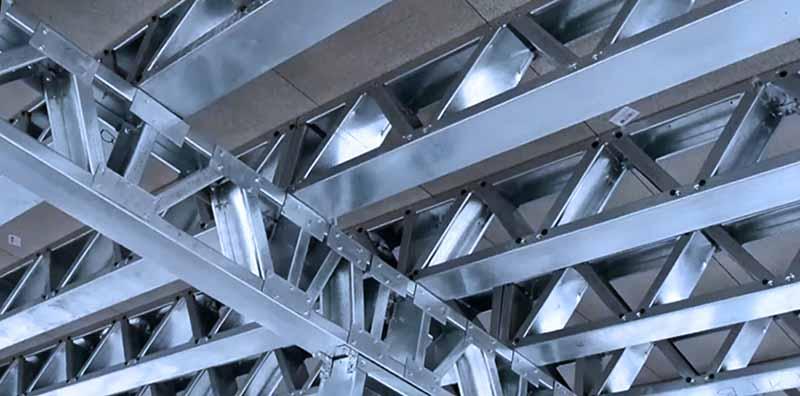
A pitched truss consists of booms, posts, and braces. The construction acts as a solid skeleton. These are rigid elements that distribute the load on the roof and walls of the building.
The maximum length of a LGSF truss is 24 meters. Additional columns are used for large spans inside a hangar or a warehouse.
WHAT ARE ROOF TRUSSES?
The choice of truss design and material depends on the type of a building. Accurate calculations are being made. The level of load distribution, spans, the shape of the building, etc. are taken into account. Reliable support elements are installed. They are made of metal, concrete, or bricks.

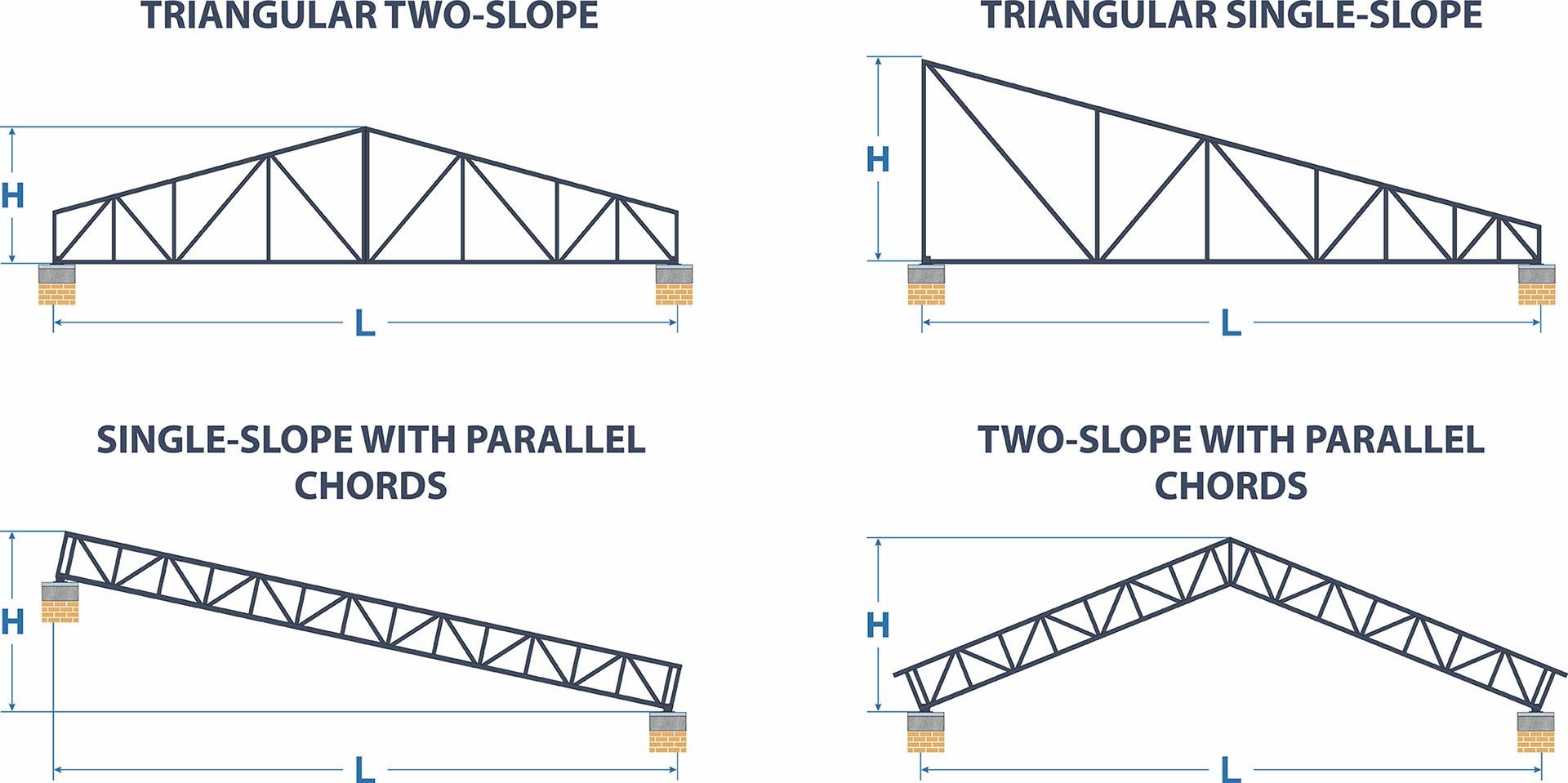
Readycon Engineering company sells four types of trusses: triangular two-slope (duo-pitch), two-slope with parallel chords, triangular single-slope, single-slope with parallel chords. The main criterion for classification is the outline of the belt. The type of the building, its dimensions, the load level and the distance between spans are taken into account to determine this indicator.
The span can be wide or narrow. This depends on the type of the construction. For very wide spans, heavy hot-rolled metal trusses are suitable.
HOW TO CHOOSE A FORM?
The choice of form depends on the type of a building. It is necessary to take into account the material for roofing. The main parameter to consider is the angle of the roof. There are non-standard structures. In this case, the choice of a form depends on the individual size and structural features.
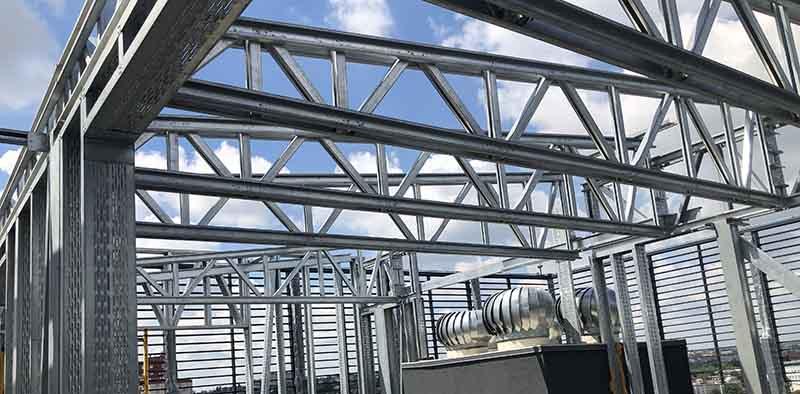
The triangular shape is used for floors, as well as buildings with a slope angle of more than 12 degrees.
For construction of residential premises, a triangular shape is most often used. There are combinations with mixed types. It all depends on the angle of inclination. Additional connections are used to increase stability. They are installed on the upper and lower belts (booms).

Advantages




TYPES of Roof trusses

Roof trusses
Completed projects


