"I need a hangar" — but which type exactly? An arched hangar is cheaper and faster to build, while a straight-walled one is more functional and durable. In this article, we provide an honest comparison of both types across 12 parameters: structure, price, height, crane beam, insulation, and timelines. No marketing — just facts, tables, and recommendations from ReadyCon engineers.
What is an arched hangar
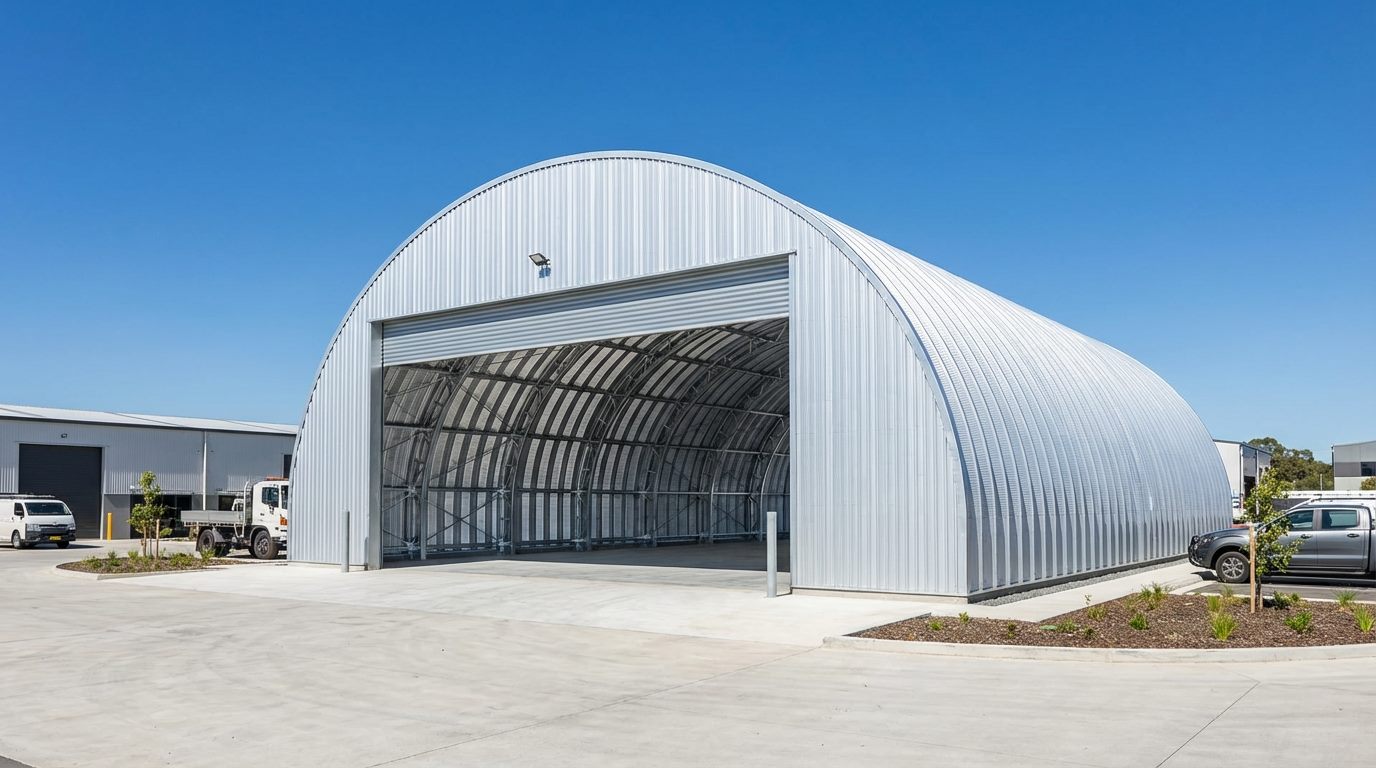
A ReadyCon arched hangar is a framed building made of LGSF profiles, where the frame forms a parabolic arch. Unlike frameless arched hangars (made of seamed profiled sheeting), ReadyCon hangars feature a full steel frame of galvanized profiles, ensuring superior strength and durability.
Fast installation
From 15 days for a 300 m² hangar. Fewer frame elements, simpler connections. Can be assembled by a crew of 4-6 workers.
Low price
From 180 $/m² turnkey — 35-50% cheaper than straight-walled. Lower steel consumption, simpler foundation.
Large clear span
Up to 24 m wide without intermediate columns. The arched shape efficiently distributes snow and wind loads.
LGSF frame
Unlike frameless arches — a full galvanized steel profile frame. Wear resistance of 30+ years, corrosion warranty.
What is a straight-walled hangar
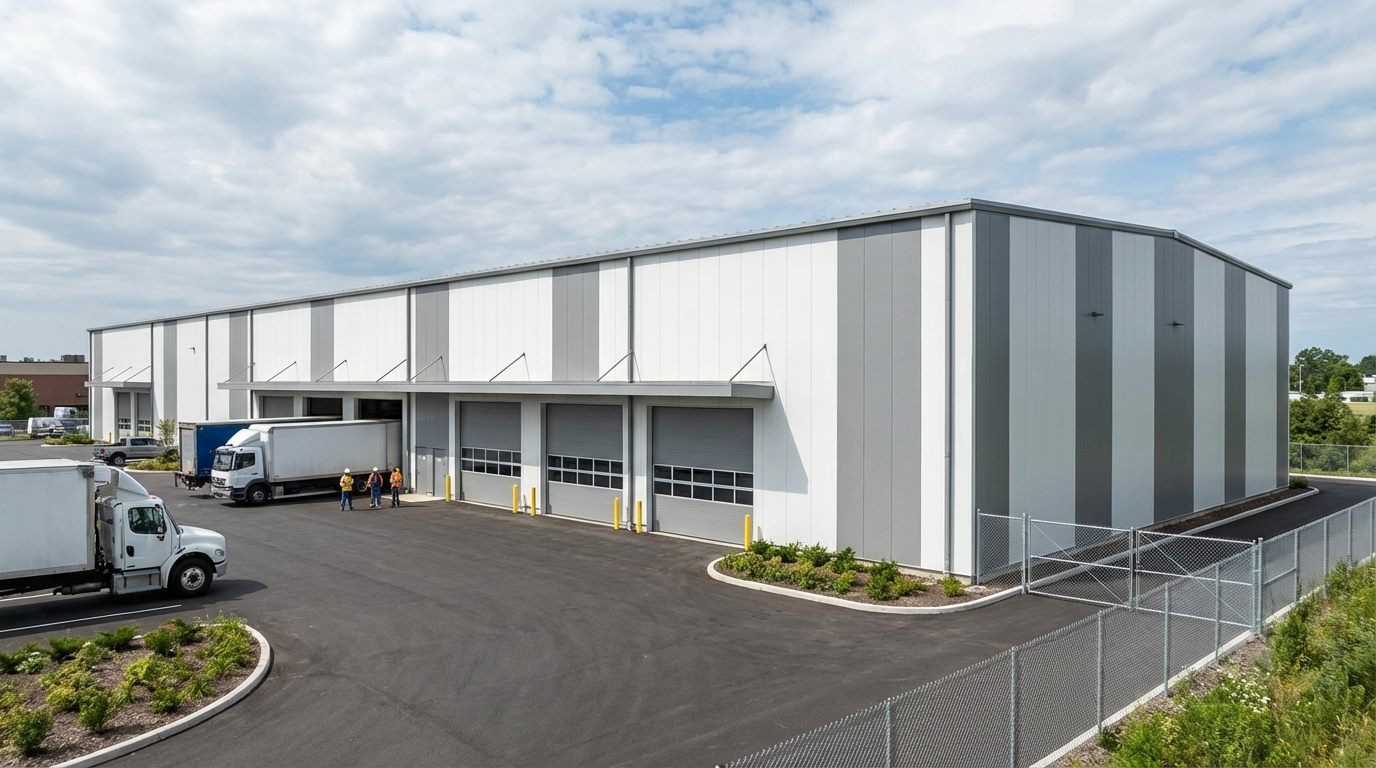
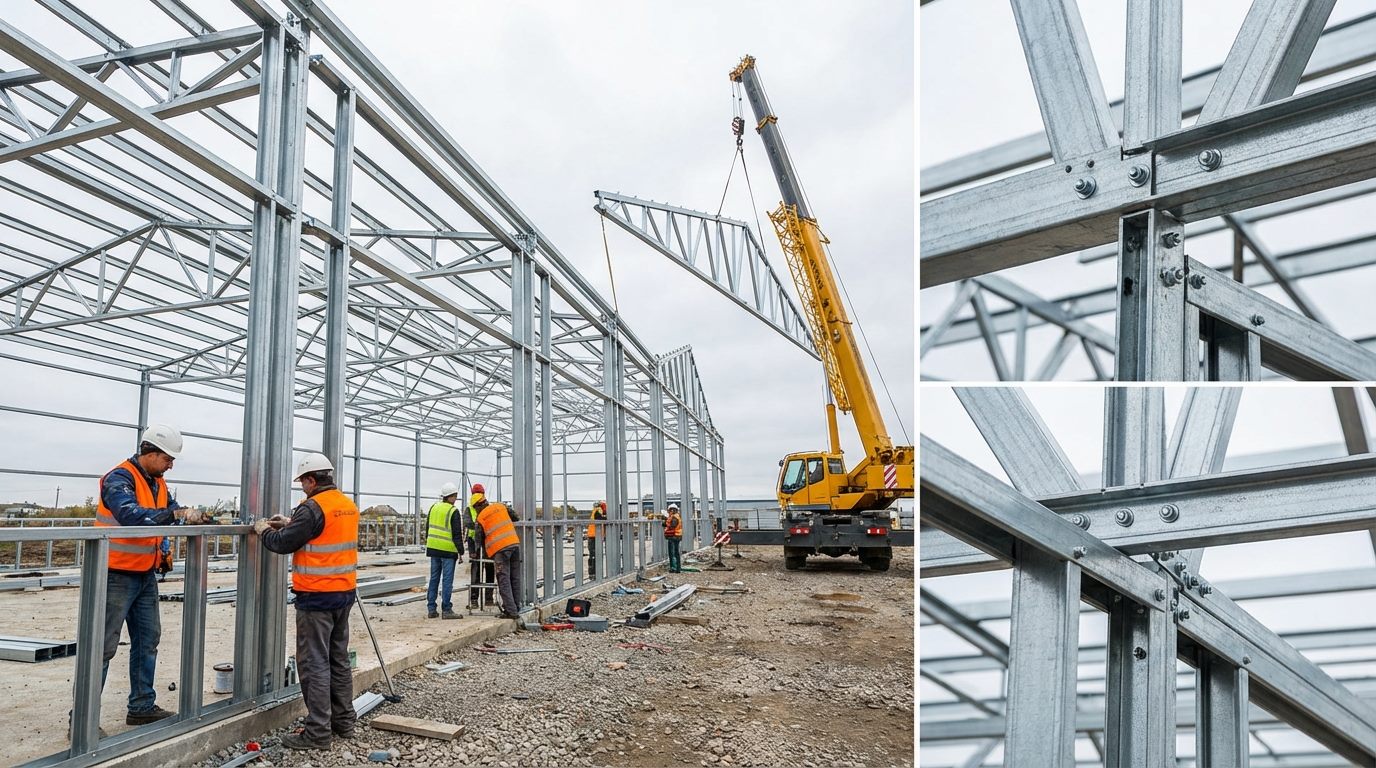
A straight-walled hangar is a classic industrial building on a frame of LGSF profiles or welded I-beams. Vertical walls, gable or single-slope roof. This is the most versatile hangar type: warehouse, production, logistics, retail — any purpose.
100% usable height
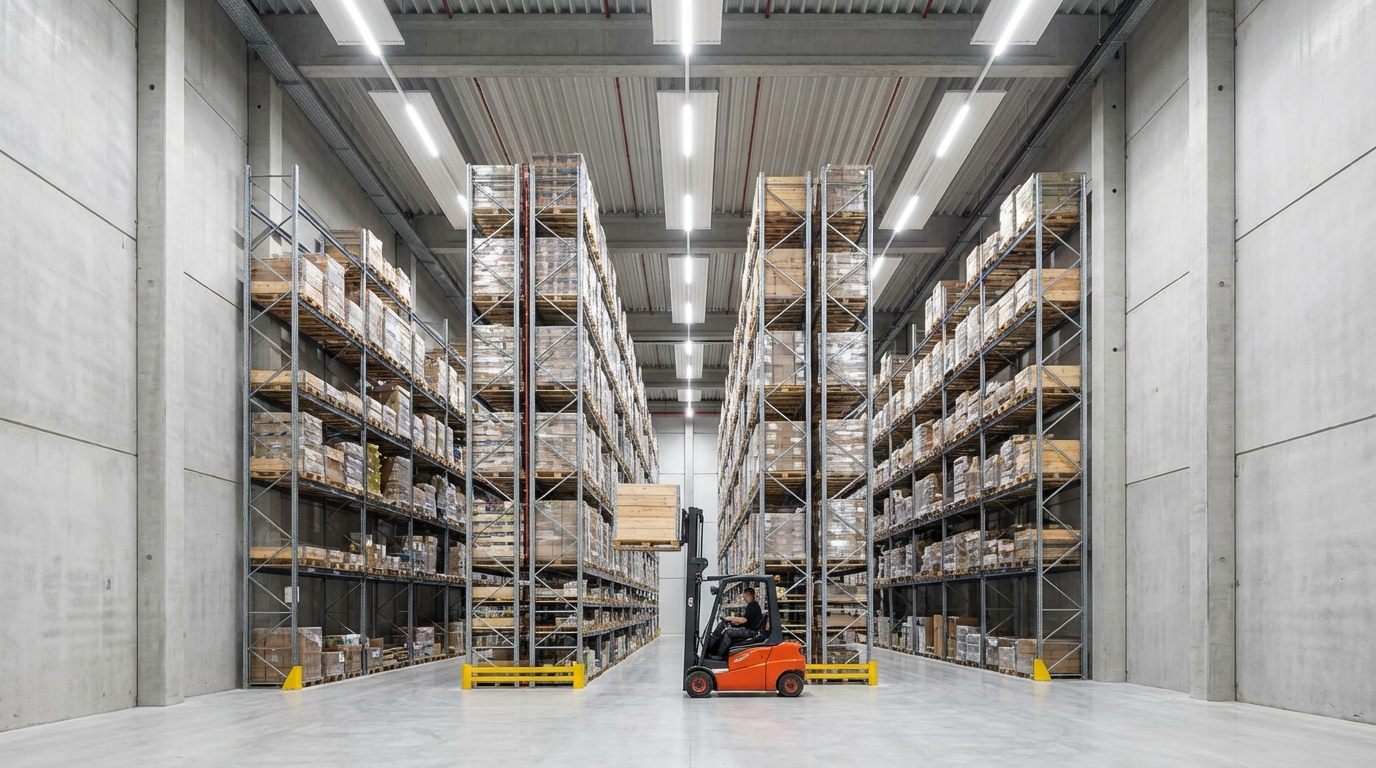
Vertical walls from 6 to 18 m. The entire height is working space: racking, crane beam, mezzanine. No "dead" space.
Crane beam up to 5 t
Underslung crane beam (up to 5 t). Crane runway beams are attached to the frame columns. Maximum in LGSF — 5 t.
Sandwich panels
Cladding with 80-150 mm sandwich panels (mineral wool or PIR). Factory insulation, R30-R60 fire resistance. More efficient and cheaper than PU foam.
Zoning and mezzanine
Partitions from sandwich panels, second floor for offices, zoning into production + warehouse + utility rooms.
Arched vs straight-walled hangar comparison across 12 parameters
The main table of this article — an objective comparison of two hangar types across all key parameters.
| Parameter | Arched hangar | Straight-walled hangar |
|---|---|---|
| Frame | LGSF profiles (arched trusses) | LGSF profiles or welded I-beams |
| Shape | Parabolic arch | Vertical walls + gable roof |
| Width (span) | up to 24 m | up to 36 m |
| Height | up to 12 m (at the apex) | 6–18 m (across entire area) |
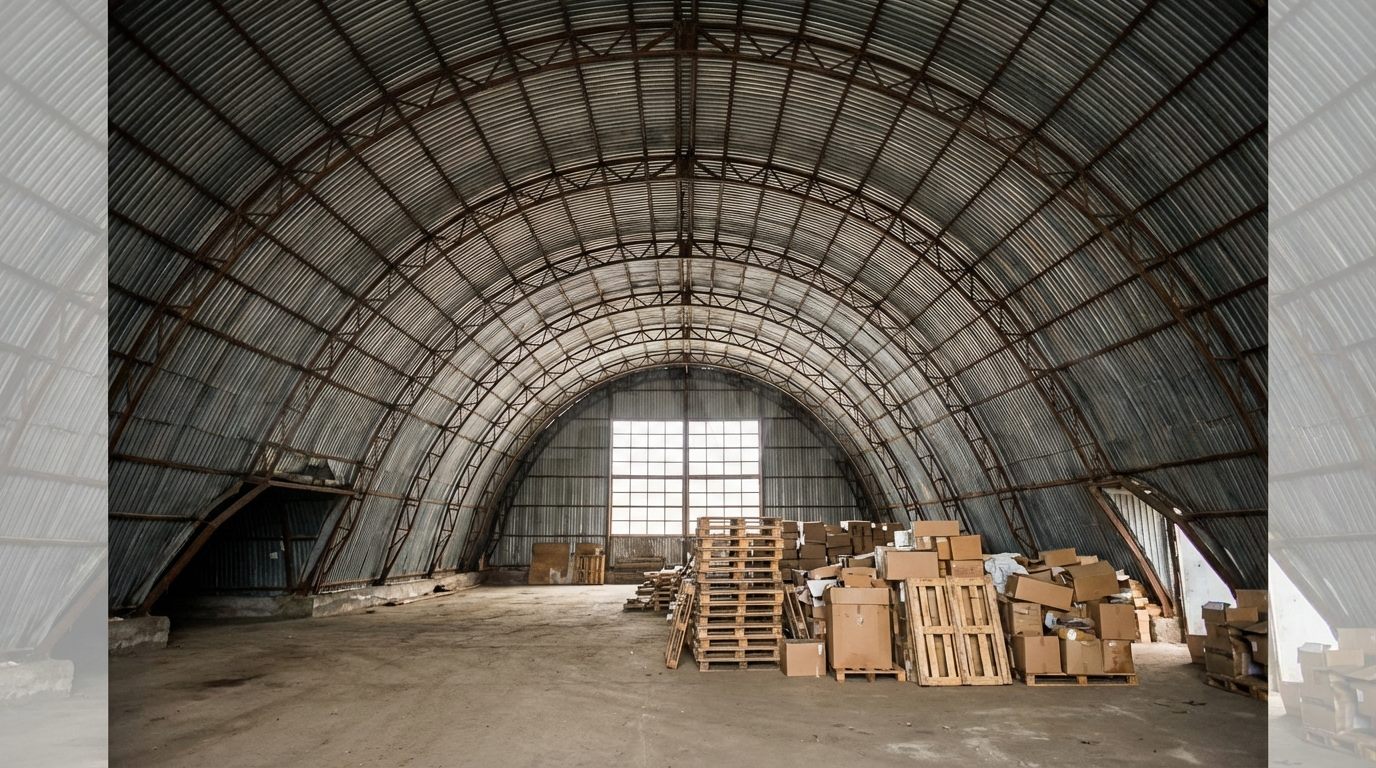
| Usable height at walls | 4–6 m (due to arch slope) | 6–18 m (100% height) |
| Crane beam | Not possible | up to 5 t (underslung crane beam) |
| Insulation | Spray PU foam (more expensive) | Sandwich panels (more efficient) |
| Cladding | Profiled sheeting on frame | Sandwich panels or profiled sheeting |
| Racking | Up to 3-4 tiers (height limitation) | Up to 6 tiers (height 12+ m) |
| Mezzanine / 2nd floor | Not possible or limited | Yes, office or warehouse |
| Installation time (500 m²) | from 15 days | from 30 days |
| Turnkey price | from 180 $/m² | from 280 $/m² |
An arched hangar means "cheap and fast." A straight-walled one means "build once — operates for 30+ years for any purpose." If your budget is limited and you only need storage — go arched. If you are planning production, logistics, or leasing — only straight-walled.
When to choose an arched hangar
An arched hangar is the optimal choice when the main criteria are speed and budget, with minimal functionality requirements.
Agriculture
Grain, machinery, fertilizer storage. Seasonal use, no heating. From 150 $/m² for uninsulated.
Temporary storage
Construction materials, raw materials, equipment. Budget up to 100,000 $, area up to 500 m². Quick solution in 2-3 weeks.
Cold warehouse
Storage of goods that do not require temperature control: building materials, metal, plastic, tires.
When to choose a straight-walled hangar
A straight-walled hangar is the right choice for long-term projects where functionality, insulation, and scalability matter.
Production
Crane beam, reinforced floor, ventilation, zoning. From metalworking to food processing.
Logistics and warehouses
Height 12+ m for 5-6 tier racking. Loading docks with ramps, climate control. Class A and B.
Leasing / investment
Class A warehouse for leasing: 14-18% yield, 5-7 year payback. Only straight-walled meets the requirements.
Auto service / car repair shop
Gates 4+ m, inspection pits, compressor room, insulation for year-round operation. Zoning: repair + warehouse + office.
Retail / showroom
Sales floor + warehouse in one building. Insulation, lighting, climate control, presentable facade.
Insulated warehouse
Temperature-controlled storage: pharmaceuticals, electronics, food products. Sandwich panels with mineral wool or PIR.
Price table: arched vs straight-walled
Indicative turnkey prices from ReadyCon (frame + cladding + installation, excluding foundation and utilities).
Arched hangars
| Configuration | Area | Price from |
|---|---|---|
| Arched, cold (profiled sheeting) | 300 m² | 54,000 $ |
| Arched, cold | 500 m² | 90,000 $ |
| Arched, insulated (PU foam) | 500 m² | 125,000 $ |
| Arched, cold | 1,000 m² | 180,000 $ |
Straight-walled hangars
| Configuration | Area | Price from |
|---|---|---|
| Straight-walled, cold (profiled sheeting) | 300 m² | 84,000 $ |
| Straight-walled, sandwich panels | 500 m² | 160,000 $ |
| Straight-walled with 5 t crane beam | 800 m² | 280,000 $ |
| Straight-walled, Class B warehouse | 1,000 m² | 320,000 $ |
| Straight-walled, Class A warehouse (12 m) | 3,000 m² | 1,080,000 $ |
Fixed price in the contract — if steel prices rise during construction, that is our risk, not yours. Payment is staged: advance upon signing, part upon delivery of structures, balance upon project handover. No 80% prepayment like most competitors.
Frequently asked questions
An arched hangar is cheaper: from 180 $/m² versus from 280 $/m² for a straight-walled one. The difference is 35-50%. However, a straight-walled hangar allows for an crane beam, mezzanine, racking, and sandwich panels, which often justifies the higher price.
Yes, but only with spray-applied PU foam from the inside — this is more expensive than sandwich panels and less efficient. A straight-walled hangar is clad with sandwich panels with factory-applied insulation (mineral wool or PIR) — better thermal insulation at a lower cost.
No. An arched structure has no vertical walls or columns for crane runway beams. An crane beam (up to 5 t) can only be installed in a straight-walled hangar.
An arched hangar — from 15 days of installation for 300 m². A straight-walled one — from 30 days. The difference is due to the simpler arched design: fewer elements, fewer bolted connections.
Up to 12 m at the apex (with a 24 m span). However, usable height at the walls is only 4-6 m due to the arch slope. A straight-walled hangar provides uniform height across the entire area — from 6 to 18 m.
Can't choose the right hangar type?
Send us your parameters: area, purpose, budget — we will select the optimal type and calculate the exact cost within 48 hours. Fixed price in the contract, staged payments, own manufacturing.

Own manufacturing: Dnipro, Sicheslavska Naberezhna St., 15A
readycon.com.ua · ReadyCon@ukr.net